Material guide · September 03, 2026
Five Elements Crystal and Material Guide
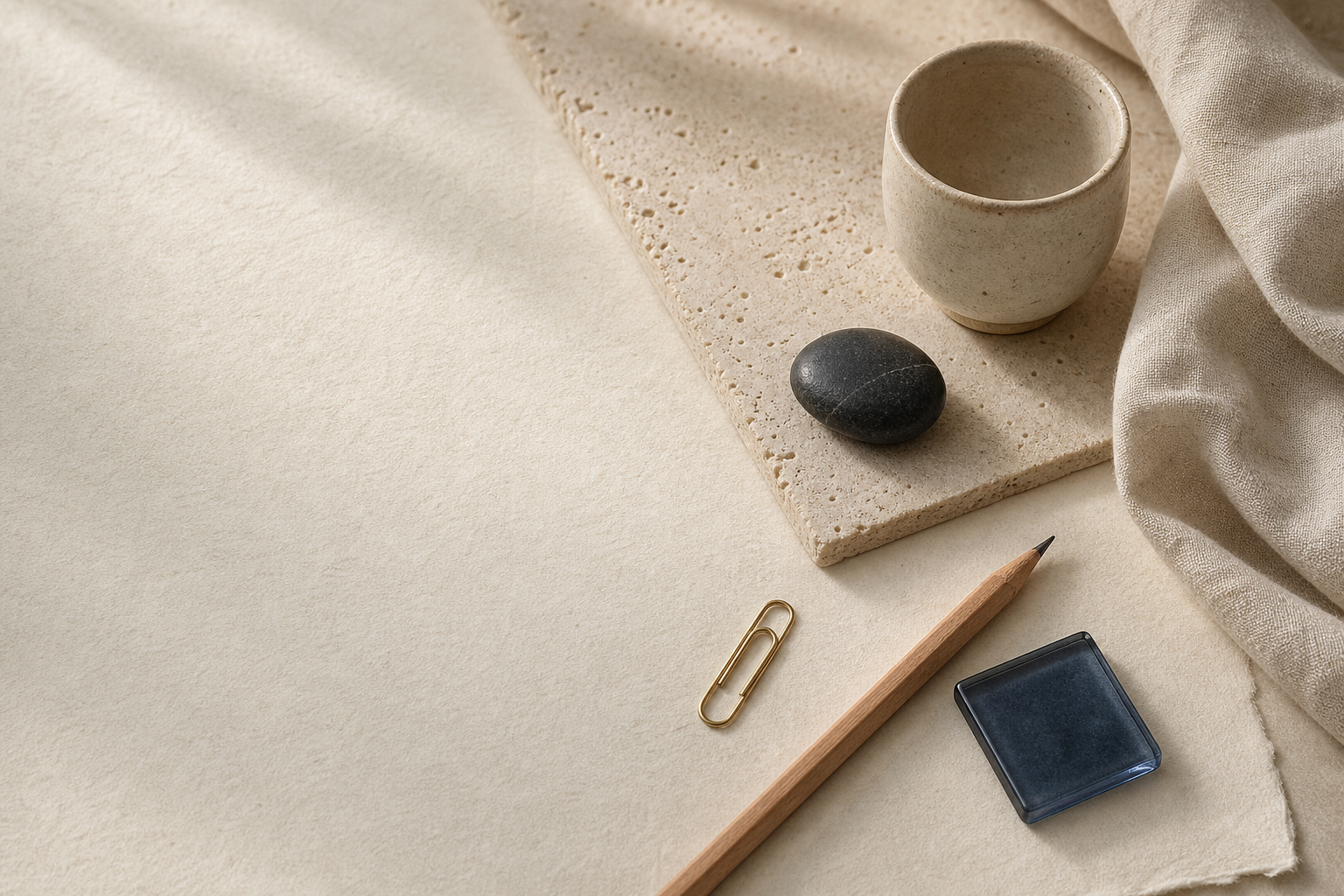
Color, texture, and material can make a useful language for setting up a desk, shelf, or journal practice. This guide treats Five Elements imagery as cultural and creative context, not as healing or outcome-based advice.
Why Material Matters
We live in an increasingly digital world. Our work happens on screens. Our relationships happen through text. Our entertainment happens in pixels. In this context, physical objects take on a new significance: they are anchors to the tangible world, reminders that we are bodies in space, not just minds processing information.
The Five Elements offer a framework for choosing these anchors with intention. Not because a particular crystal has magical properties, but because the act of choosing a physical object to represent a quality you want to cultivate is itself a meaningful practice.
Build from Material, Not Claims
Wood can suggest grain and plant forms; Fire, warmth and saturated color; Earth, clay and stone; Metal, smooth cool finishes; Water, darker glassy or fluid surfaces. These are design prompts, not fixed rules.
Wood Materials: Growth and Warmth
Wood energy is associated with growth, initiative, and the freshness of spring. In material terms, Wood suggests natural wood, bamboo, woven plant fibers, paper, and green or natural tones. A wooden desk, a bamboo pen, a paper notebook, a potted plant—these objects carry the quality of Wood: organic, warm, alive. If you want to invite more Wood energy into your space, choose objects that show the grain of the material, that age naturally, that connect you to the living world.
Fire Materials: Warmth and Light
Fire energy is associated with expression, warmth, and the fullness of summer. In material terms, Fire suggests warm metals, amber glass, textiles in red and orange, candles, and anything that catches or creates light. A brass candleholder, an amber vase, a red cushion, a sunset lamp—these objects carry the quality of Fire: radiant, inviting, alive with warmth. If you want to invite more Fire energy into your space, choose objects that glow, that warm the room, that draw the eye.
Earth Materials: Grounding and Stability
Earth energy is associated with stability, nourishment, and the harvest of late summer. In material terms, Earth suggests ceramics, stone, clay, crystal, and earthy tones. A ceramic mug, a stone paperweight, a clay bowl, a crystal cluster—these objects carry the quality of Earth: solid, grounding, present. If you want to invite more Earth energy into your space, choose objects that have weight, that feel good in the hand, that connect you to the ground.
Metal Materials: Clarity and Precision
Metal energy is associated with clarity, discernment, and the refinement of autumn. In material terms, Metal suggests polished metals, glass, white or grey tones, and objects with clean lines. A steel paperweight, a glass paperclip, a white ceramic cup, a silver pen—these objects carry the quality of Metal: precise, clear, refined. If you want to invite more Metal energy into your space, choose objects that are simple, well-made, and free of unnecessary decoration.
Water Materials: Depth and Stillness
Water energy is associated with wisdom, depth, and the stillness of winter. In material terms, Water suggests dark glass, black stones, fluid shapes, and deep blue or black tones. A dark glass vase, a black stone, a blue ceramic bowl, a small fountain—these objects carry the quality of Water: quiet, deep, patient. If you want to invite more Water energy into your space, choose objects that suggest depth, that invite stillness, that hold light rather than reflect it.
Check the Listing Carefully
Look for clear material names, dimensions, photographs, finish details, care advice, and return terms. Be cautious of medical, emotional, financial, or protective claims that a seller cannot substantiate. A well-described product is more useful than a listing built around sweeping promises.
Use Objects as Prompts
A stone, ceramic cup, notebook, or small plant can mark the beginning of a writing session or a quiet pause. The practice matters more than owning a particular object. The object is a cue; the practice is the thing itself.
Choose Less, with Intention
Start with one item you genuinely like. Keep it if it supports a useful routine; set it aside if it does not. There is no required crystal, color, or purchase. The Five Elements are a vocabulary for noticing, not a shopping list.
Browse Optional Resources
Our recommendation center keeps the focus on material, comfort, and context. Explore objects chosen for their craft and reflective potential.
Explore recommendations