Material & culture · September 03, 2026
What Does an Obsidian Bracelet Mean?
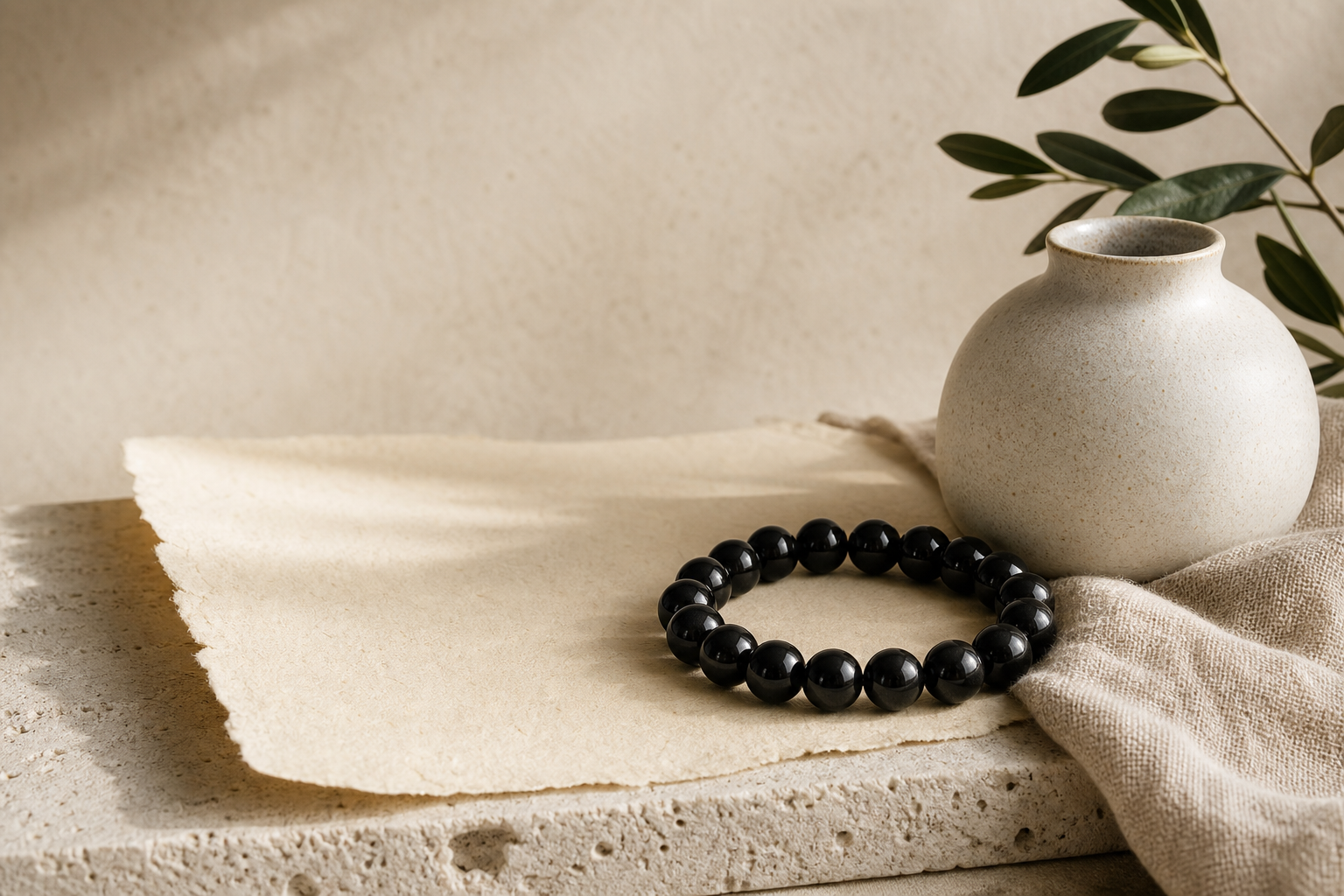
Obsidian is a volcanic glass. In contemporary jewelry, an obsidian bracelet can be a way to enjoy its dark, reflective surface and to engage thoughtfully with cultural stories. This guide covers what obsidian is, how to identify quality, and how to wear it with respect.
Start with the Material
Natural obsidian forms when lava cools rapidly. The result is a volcanic glass with a smooth, conchoidal fracture and a naturally dark color—usually black, but sometimes with grey, brown, or rainbow sheens. It has been used for tools, mirrors, and ornaments for thousands of years across many cultures.
Listings vary in material disclosure, bead size, and finishing, so use the product description as a starting point rather than assuming every dark bead is obsidian. Genuine obsidian is cool to the touch, heavy for its size, and has a glassy luster. If a listing simply says "black crystal" or "black stone" without specifying obsidian, the material may be something else—dyed glass, plastic, or another dark mineral.
Meaning Is Contextual, Not a Guarantee
Some people connect black obsidian with boundaries or quiet reflection. Those are personal and cultural associations, not claims that a bracelet can protect, heal, change luck, or produce a particular outcome. In various cultural traditions, dark stones have been associated with grounding, with the absorption of what is not needed, with the depth of the night sky. These are poetic associations, not scientific claims.
The meaning you bring to an obsidian bracelet is yours to create. Some people wear it as a reminder to maintain boundaries. Others wear it simply because they like the way it looks. Both approaches are valid.
Obsidian in Cultural Context
Obsidian has a long history across many cultures. In Mesoamerican civilizations, it was used for mirrors, knives, and ritual objects. In ancient Egypt, it was carved into amulets. In Chinese cultural traditions, dark stones have been associated with the Water element—depth, wisdom, and the capacity to hold stillness.
When you wear an obsidian bracelet, you are participating in a long human tradition of finding meaning in natural materials. This does not require you to adopt any particular belief system. It simply invites you to engage thoughtfully with the object and the stories it carries.
Choose for Comfort and Craft
Check bead diameter, elastic tension, wrist measurement, finish, return policy, and material identification. A smaller bead can feel lighter; a larger bead creates a more visible look. Consider how you will wear the bracelet: daily or occasionally? Alone or with other jewelry? In a professional setting or only in personal time?
Quality Indicators
- Consistent color: Genuine obsidian should be evenly colored, without obvious dye concentrations in cracks.
- Smooth finish: Beads should be polished smooth, without rough edges or visible bubbles (which suggest glass imitation).
- Weight: Obsidian feels heavier than plastic and cooler than glass when first touched.
- Translucency at edges: Hold a bead up to light. Genuine obsidian may show slight translucency at thin edges.
Respectful Use
There is no single universal rule for wearing an obsidian bracelet. Let comfort, maker care instructions, and cultural context guide a considered choice. If you are drawn to the cultural associations, take time to learn about them from reliable sources. If you are drawn to the material itself, appreciate it for what it is: a piece of cooled lava, transformed by human craft into something you can wear.
Affiliate Note
As an Amazon Associate, Eastern Self earns from qualifying purchases. We choose objects based on material quality and honest description rather than marketing claims.
Browse Reflective Resources
Our recommendation center explains how we choose optional material and home-object categories.
Explore recommendations