Cultural context · September 03, 2026
Pixiu Bracelet Meaning and Cultural Context
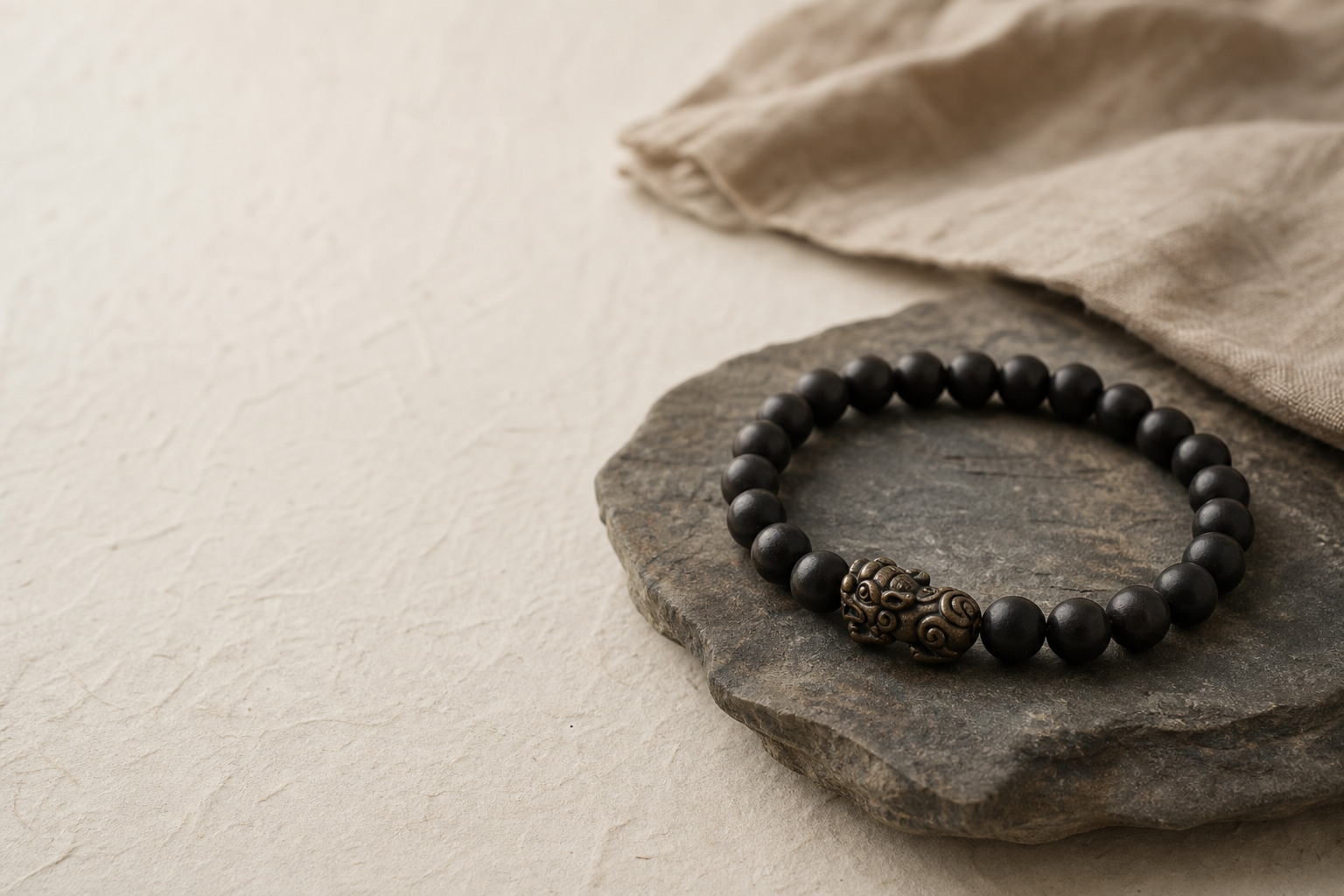
Pixiu is a mythic creature in Chinese cultural traditions. Its imagery appears in sculpture, decorative art, and contemporary jewelry, where meanings vary across households, regions, and individual practice. This guide offers context for understanding and choosing Pixiu-inspired objects.
Who Is Pixiu?
Pixiu (貔貅) is a legendary creature in Chinese culture, often described as a winged lion with a dragon's head and a single horn (or two horns, depending on the tradition). It is said to have an appetite for gold, silver, and jewels—and, crucially, no anus, meaning what enters cannot leave. This characteristic has made Pixiu a popular symbol for wealth accumulation in Chinese cultural imagery.
But Pixiu is more than a wealth symbol. In traditional Chinese culture, it is also associated with protection, courage, and the warding off of negative influences. Stone Pixiu have been placed at gateways, in gardens, and in homes for centuries. The creature appears in classical texts, in imperial architecture, and in folk art across many regions of China.
A Cultural Symbol, Not a Financial Promise
Pixiu is often discussed in relation to protection or prosperity in popular culture. It should not be presented as a way to attract wealth, guarantee luck, or change financial outcomes. The cultural association between Pixiu and wealth is a symbolic tradition, not a financial mechanism. Wearing a Pixiu bracelet does not cause money to appear in your bank account, just as wearing a cross does not guarantee divine protection.
This does not make the symbol meaningless. It means the meaning is cultural, personal, and reflective rather than transactional. A Pixiu bracelet can serve as a reminder of the qualities the creature represents: courage, discernment, the ability to hold what is valuable. These are qualities worth cultivating regardless of your financial situation.
Look at Design and Material
When comparing bracelets, check whether the carving is clear, how it is attached, the material description, bead size, finish, and care instructions. A well-described product is more useful than a listing built around sweeping claims.
Common Materials
- Jade: The most traditional material for Pixiu carvings. Genuine jade (nephrite or jadeite) is cool to the touch, heavy, and has a subtle luster. Be aware that "jade" is used loosely in many listings—dyed quartz, glass, and plastic are often sold as jade.
- Obsidian: A volcanic glass, often black, associated with the Water element. Obsidian Pixiu bracelets combine the creature's protective symbolism with the stone's grounding associations.
- Black onyx: A dark, polished stone often used for carved charms. It is less expensive than jade and obsidian but can be visually similar.
- Wood: Sandalwood or other aromatic woods are sometimes used for Pixiu beads, combining the creature's symbolism with the sensory experience of natural wood.
Quality Indicators
- Carving detail: The Pixiu should be clearly recognizable—head, body, legs, and horn(s) should be distinct.
- Material honesty: The listing should state the actual material, not use vague terms like "natural crystal" or "precious stone."
- Construction: How is the Pixiu charm attached to the bracelet? Is it securely fastened? Will it survive daily wear?
- Return policy: Can you return it if the material or quality does not match the description?
No Single Wearing Rule
Advice about how to wear Pixiu differs widely. Some traditions say wear it on the left hand to "attract" wealth; others say the right hand. Some say the Pixiu's head should face outward; others say it should face your wrist. If a custom matters to you, learn its local or family context; otherwise, choose a respectful approach that fits your comfort and style.
The most important thing is not the hand or the direction but the intention. If you wear a Pixiu bracelet as a reminder of courage, discernment, and the capacity to hold what is valuable, you are honoring the symbol regardless of which hand it is on.
Buy Thoughtfully
Use retailer information, return policies, and material details to make a practical decision. Avoid products that market fear, urgency, or guaranteed outcomes. A Pixiu bracelet purchased thoughtfully—from a seller who discloses materials, offers fair returns, and makes no impossible promises—is a better object than one bought in a panic because a listing told you your luck would change if you acted now.
Affiliate Note
As an Amazon Associate, Eastern Self earns from qualifying purchases. We choose objects based on material quality, honest description, and cultural respect.
Explore Material-Led Resources
See how Eastern Self frames optional objects for cultural reflection.
Explore recommendations